不人气的大狸子
Tanuki
Before diving into the main text, let's first take a look back at the Touhou community in China in 2025.
The year 2025 marks a milestone for China's Touhou community. Newcomers who joined during the COVID-19 era (2022-2022) have begun to emerge as primary creators, most of whom were drawn to the community through video platforms like Douyin and Bilibili.
(https://b23.tv/8SSXVhI)
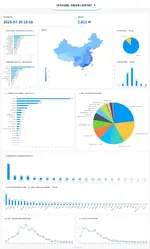
Offline activities saw unprecedented growth in 2025, with Touhou events reaching a record high across 30 provincial-level administrative regions in China. Both visitor numbers and the count of Doujin clubs hit new peaks, while nighttime live performances gained widespread popularity.

(https://thonly.cc/)
If this trend continues, the Chinese Touhou community seems poised for greater success by 2026.
But changes in reality often turn out to be a “theory of black swan events”.
In October 2025, Sanae Takaichi was elected as Japan's prime minister. Some of her remarks sparked a series of political controversies related to China.
In response to Sanae Takaichi's remarks, the Chinese government has begun restricting the dissemination of Japanese culture. The resulting impacts include: suspension of film approvals, and cancellations of concerts and performances.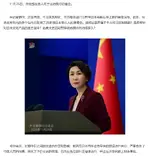
And most importantly, the doujinshi convention has begun restricting Japanese IP addresses.
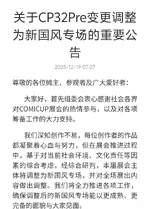
In December 2025, China's largest doujinshi convention, Comicup32, abruptly announced its transition to a “New Chinese Style Special Event.” All Japanese anime IP exhibitions were canceled, on-site booths were prohibited from selling Japanese manga IP merchandise, distributed goods could not feature Japanese manga elements, and even cosplayers were barred from portraying characters related to Japanese manga IP.
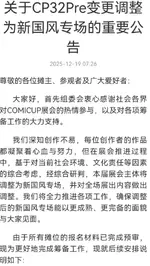
This undoubtedly sends an extremely dangerous signal: If Japanese elements cannot appear at doujinshi conventions, does that mean Touhou-only events cannot be held smoothly in China either?
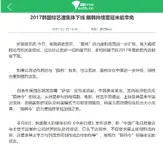
A similar situation occurred in 2013, when the Chinese government restricted comic conventions amid territorial disputes over the Diaoyu Islands. In 2016, the “ban on Korean cultural products” imposed in response to South Korea's deployment of the THAAD missile defense system directly impacted the spread of the Korean Wave in China, with effects that persist to this day.
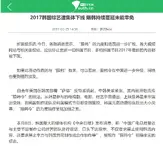
The ACGN industry has clearly become a casualty of political struggles between nations.
The Touhou Only convention first appeared as early as 2009, making it China's earliest Only convention. However, due to China's stringent requirements for large gatherings, very few THO have been granted approval by local governments.
According to relevant legal provisions, gatherings exceeding 100 people require authorization from the local cultural bureau and public security bureau. Otherwise, they will be deemed illegal assemblies, which is a very serious charge.
In reality, the community entered a state of mutual distrust as early as last year, primarily due to the reporting controversy involving Nanjing THO. The “National Touhou Offline Event Organizers Conference” held last October further shattered the foundation of trust. (I will cover this incident separately in the future).
In other words, Touhou communities across different regions are no longer as united as they once were, making it difficult to respond promptly during emergencies.
In December 2025, exhibitions began to be canceled one after another, with the most representative being the Harbin THO, one of the largest THO events in Northeast China.
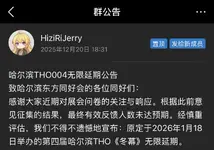
Force majeure is a common excuse. Though the organizing committee didn't elaborate, everyone understood what had happened. It was likely either a warning from the authorities or a complaint filed against them.
Following this, cities including Qiqihar, Yichang, Hengyang, and Kaifeng also successively canceled their originally scheduled events.
As for online platforms, following criticism of Pokémon and Detective Conan by Chinese state media, many have expressed concern over Touhou as well, given that ZUN previously made politically charged remarks about Sino-Japanese relations on Twitter.(I have doubts about its authenticity, I'm more concerned about whether Ruw's own actions might lead to the Chinese government imposing “sanctions” on Touhou)
Due to the Chinese government's crackdown on political discourse, people often use anime characters as substitutes for real-life political figures, such as in BanG Dream!. Touhou has also become a target for deconstruction by this group. Personally, I find this quite serious, as it undermines legitimate doujin creation.
Touhou has now inevitably been drawn into the “war” among gacha games led by Genshin Impact, Wuthering Waves, and Arknights.
What will the Chinese Touhou community look like in 2026? I don't have a clear answer, but regardless, it has been forced into a whirlpool.
Given that only two months have passed this year, no one knows how things will unfold in the future. But I don't want Touhou to become a political pawn.
Written on Chinese New Year's Eve.
The year 2025 marks a milestone for China's Touhou community. Newcomers who joined during the COVID-19 era (2022-2022) have begun to emerge as primary creators, most of whom were drawn to the community through video platforms like Douyin and Bilibili.
(https://b23.tv/8SSXVhI)
Offline activities saw unprecedented growth in 2025, with Touhou events reaching a record high across 30 provincial-level administrative regions in China. Both visitor numbers and the count of Doujin clubs hit new peaks, while nighttime live performances gained widespread popularity.
(https://thonly.cc/)
If this trend continues, the Chinese Touhou community seems poised for greater success by 2026.
But changes in reality often turn out to be a “theory of black swan events”.
In October 2025, Sanae Takaichi was elected as Japan's prime minister. Some of her remarks sparked a series of political controversies related to China.
In response to Sanae Takaichi's remarks, the Chinese government has begun restricting the dissemination of Japanese culture. The resulting impacts include: suspension of film approvals, and cancellations of concerts and performances.
And most importantly, the doujinshi convention has begun restricting Japanese IP addresses.
In December 2025, China's largest doujinshi convention, Comicup32, abruptly announced its transition to a “New Chinese Style Special Event.” All Japanese anime IP exhibitions were canceled, on-site booths were prohibited from selling Japanese manga IP merchandise, distributed goods could not feature Japanese manga elements, and even cosplayers were barred from portraying characters related to Japanese manga IP.
This undoubtedly sends an extremely dangerous signal: If Japanese elements cannot appear at doujinshi conventions, does that mean Touhou-only events cannot be held smoothly in China either?
A similar situation occurred in 2013, when the Chinese government restricted comic conventions amid territorial disputes over the Diaoyu Islands. In 2016, the “ban on Korean cultural products” imposed in response to South Korea's deployment of the THAAD missile defense system directly impacted the spread of the Korean Wave in China, with effects that persist to this day.
The ACGN industry has clearly become a casualty of political struggles between nations.
The Touhou Only convention first appeared as early as 2009, making it China's earliest Only convention. However, due to China's stringent requirements for large gatherings, very few THO have been granted approval by local governments.
According to relevant legal provisions, gatherings exceeding 100 people require authorization from the local cultural bureau and public security bureau. Otherwise, they will be deemed illegal assemblies, which is a very serious charge.
In reality, the community entered a state of mutual distrust as early as last year, primarily due to the reporting controversy involving Nanjing THO. The “National Touhou Offline Event Organizers Conference” held last October further shattered the foundation of trust. (I will cover this incident separately in the future).
In other words, Touhou communities across different regions are no longer as united as they once were, making it difficult to respond promptly during emergencies.
In December 2025, exhibitions began to be canceled one after another, with the most representative being the Harbin THO, one of the largest THO events in Northeast China.
Force majeure is a common excuse. Though the organizing committee didn't elaborate, everyone understood what had happened. It was likely either a warning from the authorities or a complaint filed against them.
Following this, cities including Qiqihar, Yichang, Hengyang, and Kaifeng also successively canceled their originally scheduled events.
As for online platforms, following criticism of Pokémon and Detective Conan by Chinese state media, many have expressed concern over Touhou as well, given that ZUN previously made politically charged remarks about Sino-Japanese relations on Twitter.(I have doubts about its authenticity, I'm more concerned about whether Ruw's own actions might lead to the Chinese government imposing “sanctions” on Touhou)
Due to the Chinese government's crackdown on political discourse, people often use anime characters as substitutes for real-life political figures, such as in BanG Dream!. Touhou has also become a target for deconstruction by this group. Personally, I find this quite serious, as it undermines legitimate doujin creation.
Touhou has now inevitably been drawn into the “war” among gacha games led by Genshin Impact, Wuthering Waves, and Arknights.
What will the Chinese Touhou community look like in 2026? I don't have a clear answer, but regardless, it has been forced into a whirlpool.
Given that only two months have passed this year, no one knows how things will unfold in the future. But I don't want Touhou to become a political pawn.
Written on Chinese New Year's Eve.