不人气的大狸子
Tanuki
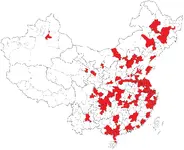
This is a map of China. The areas marked in red are areas where Touhou offline activities have been held. It involves about 90 cities and shows interesting distribution characteristics. Based on this, I will help you understand the cultural and social factors behind this.
It witnesses the development of China's Touhou offline activities from 2009 to 2024. The number of China's Touhou offline activities ranks second in the world, only after Japan. Compared with Touhou communities in other regions (such as Southeast Asia), due to economic constraints, there are not such frequent Touhou offline activities.
Maybe we should define "Touhou offline activites".
The main Touhou offline events are divided into THO (Touhou Only) and THP (Touhou party). They are Touhou-themed comic exhibitions, THO is larger than THP, and THO focuses more on sales, while THP is entertainment.
Let’s take THO as an example. THO has the following characteristics:
1. All the Cosplays on the are Touhou characters
2. All programs have the Touhou element
3. Most of the tourists are Touhou enthusiasts.
Well, if you are from the US, THO is like TouhouFest
Nationwide, offline activities themed on the Touhou Project show a significant uneven distribution. Overall, such activities are mainly concentrated in economically developed and densely populated areas, while they are relatively scarce in western or remote areas. This distribution pattern is closely related to the regional economic level, transportation convenience, and the acceptance of local ACG culture.
Marx once said that the economic base determines the superstructure. Therefore, the more developed the economy is, the more open-minded people are, and the more they accept ACG culture.
You can clearly see that they are mostly distributed in coastal provinces and economically developed urban agglomerations, such as the Yangtze River Delta (Shanghai, Jiangsu, Zhejiang, etc.), the Pearl River Delta (Guangzhou, Shenzhen, etc.) and the Beijing-Tianjin-Hebei (Beijing, Tianjin, etc.) regions. They are the most economically developed regions in China, benefiting from the reform and opening up since 1978.
The urban cultural ecology is mainly reflected in first-tier and key cities, such as the Beijing-Tianjin-Hebei, Yangtze River Delta and Pearl River Delta regions. The frequent offline activities of Touhou Project are inseparable from the strong local atmosphere of animation, games and Doujin culture. These cities have a mature cultural industry system and a large number of university resources. Young people gather and art clubs are active, providing a natural soil for Doujin activities. In these areas, in addition to large-scale exhibitions and Doujin gatherings, you can often see diversified activities such as COSPLAY competitions, fan markets and theme lectures. Many organizers and participants mentioned in the activities that it is precisely because of the unique open and inclusive environment of these cities that the originally scattered fan power has quickly condensed into a vibrant cultural community. Through interviews and on-site observations, it is not difficult to find that in these cities, cultural exchanges are no longer limited to online discussions, but face-to-face interactions inspire more creative sparks, which in turn promotes the continuous innovation of Doujin works and related derivative industries.
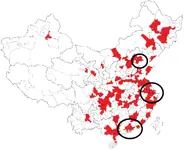
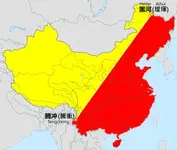
The Heihe-Tengchong line is an imaginary straight line that runs through the territory of China. It roughly divides the regional distribution of China's population and reflects the huge difference between the distribution areas of China's population in the southeast and northwest. Interestingly, our picture also reflects the characteristics of the Heihe-Tengchong line.
The Heihe-Tengchong line has also become a dividing line in terms of urbanization level. Most provinces and cities in the southeast of this line have an urbanization level higher than the national average, while most provinces and cities in the northwest of this line have an urbanization level lower than the national average.
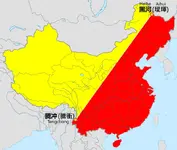
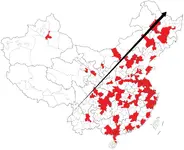
In sharp contrast, due to relatively backward economic conditions, inconvenient transportation and limited cultural communication channels, offline activities with the theme of Touhou Project are rarely held in western and remote areas. However, with the popularization of the Internet and the gradual development of regional economy, cultural activities in these areas are expected to gradually become active, showing certain growth potential and development space.
When analyzing the distribution of offline activities of Touhou Project in China, we must pay attention to several key influencing factors. First, economic development and cultural consumption levels play a decisive role in the holding of activities. Economically developed regions not only have higher consumption capacity, but also have stronger purchasing power of fan groups, which provides more financial support for organizers in the organization of activities. In recent years, industries related to animation have developed rapidly. The Chinese government calls it "谷子经济", and the market size in 2024 is as high as 23 billion US dollars. At the same time, the business environment in these regions is mature, which can better absorb and promote Doujin culture, form a stable profit model, and thus attract more high-quality activities and brand sponsorship.

Secondly, the concentration of young population and university resources in cities has also significantly promoted the holding of activities. University clubs, animation clubs and various cultural organizations in university towns and large cities can often provide venues, publicity and creative talents for Doujin activities. For example, Peking University once invited ZUN to give a lecture, and Touhou fans of universities in Shanghai spontaneously formed the Shanghai Touhou University Alliance. It is precisely because of the enthusiasm of young groups for the two-dimensional culture and the pursuit of fresh ideas that these areas have become important sources and gathering places for fan activities.
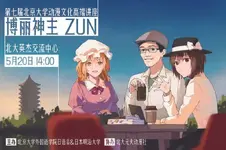
In addition, the social and cultural atmosphere also plays an important role. Different regions have different acceptance and recognition of the two-dimensional culture, which directly affects the frequency and scale of activities. In cities that are open to subcultures and more inclusive, offline activities tend to be more successful; while in areas with a relatively conservative cultural atmosphere, fan activities may face more restrictions and challenges. Media reports and public opinion also play a catalytic or restrictive role in this process, further affecting the activity of the community. For example, Shanghai TV once reported Comicup29, which was a milestone event.

Finally, transportation convenience and information dissemination channels are also important factors affecting the distribution of activities. First-tier cities and transportation hubs provide good conditions for holding large-scale events due to their developed transportation networks and frequent personnel flows. China's developed high-speed rail network provides support, and Shanghai THO is almost attended by Touhou enthusiasts from all over the country. At the same time, the popularity of new media platforms such as Weibo, Bilibili, WeChat, and QQ has enabled information to be quickly transmitted and spread, which not only increases the popularity of the event, but also promotes instant interaction and participation among fans. Cities with high information dissemination efficiency can usually gather a large number of like-minded people in a relatively short period of time, promoting the rapid implementation of activities. As of 2024, there are as many as 1,457 Touhou-related groups on QQ.

Due to the relatively backward economic development, limited transportation conditions and insufficient cultural communication channels in the western and some remote areas, there are relatively few offline activities of the Touhou Project. However, these regions also have a passion for ACG culture, but the forms of expression and channels of communication are not yet mature. With the increase in the popularity of the Internet and the gradual improvement of the regional economy, the young generation in the western region has been increasingly receptive to foreign culture, which provides an opportunity for the implementation of Doujin activities in the future.
Unfortunately, I don’t have enough data to compare the connections and differences between Chinese and international Touhou communities, but I imagine that as time goes by, such collaborations will become more and more common.
The regional distribution characteristics of China's Touhou Project offline activities not only reflect the differences in regional economic and cultural environments, but also have a profound impact on the cohesion of the entire community and the effect of cultural communication. In economically developed and densely populated cities, the frequent holding of offline activities has made the interaction between fans closer and the cohesion of the community has been significantly improved. Such a gathering effect not only helps to inspire Doujin's creative inspiration and promote the development of Doujin's works, derivative products and commercial peripheral sales, but also provides a solid foundation for the inheritance of the entire Touhou Project culture. Face-to-face communication and on-site experience allow fans to continue their love for the original work and shape a unique cultural identity in constant interaction.
At the same time, cross-border cooperation and cultural innovation are injecting new vitality into China's Touhou Project community. ACG culture shows unlimited creative potential in the collision with local characteristics, traditional culture and other subcultures (such as VOCALOID, Cosplay, music festivals, etc.). Actual cases show that some local fan activities not only incorporate regional cultural elements, but also break the single model of traditional fan activities through cooperation with local art groups or cultural institutions, creating a new form of activity that retains the original Touhou Project spirit and has local characteristics. This cross-border cooperation not only expands the boundaries of community activities, but also provides more creators with innovative inspiration and practice platforms.
Looking to the future, the development trend of China's Touhou Project community is worth looking forward to. First, with the continuous expansion of the community's influence, offline activities are expected to gradually penetrate into third- and fourth-tier cities, thus forming a more extensive and multi-level activity network; secondly, the scale and professionalism of the activities may also continue to improve with the accumulation of experience of the organizers and the continuous advancement of commercial operations, which will not only meet the needs of fans to communicate, but also promote the development of related derivative industries; in addition, the connection between international communities is becoming closer, and cross-border exchanges and cooperation will bring more resources and inspiration to the Chinese community. As fans and creators, how to balance commercialization and fan freedom in continuous exploration and maintain the inheritance of the core spirit of Touhou Project will become the key to future development.
In short, the development of Touhou Project offline activities has not only promoted the dissemination and innovation of Doujin culture in China, but also provided valuable practical experience for the exchange and integration of diverse cultures. In the future, with the continuous enrichment of activity forms and the deepening of cross-border cooperation, the Chinese Touhou Project community is expected to better integrate into the trend of global Doujin culture while maintaining its own unique charm, opening up new horizons for cultural innovation and inheritance.
Q.E.D